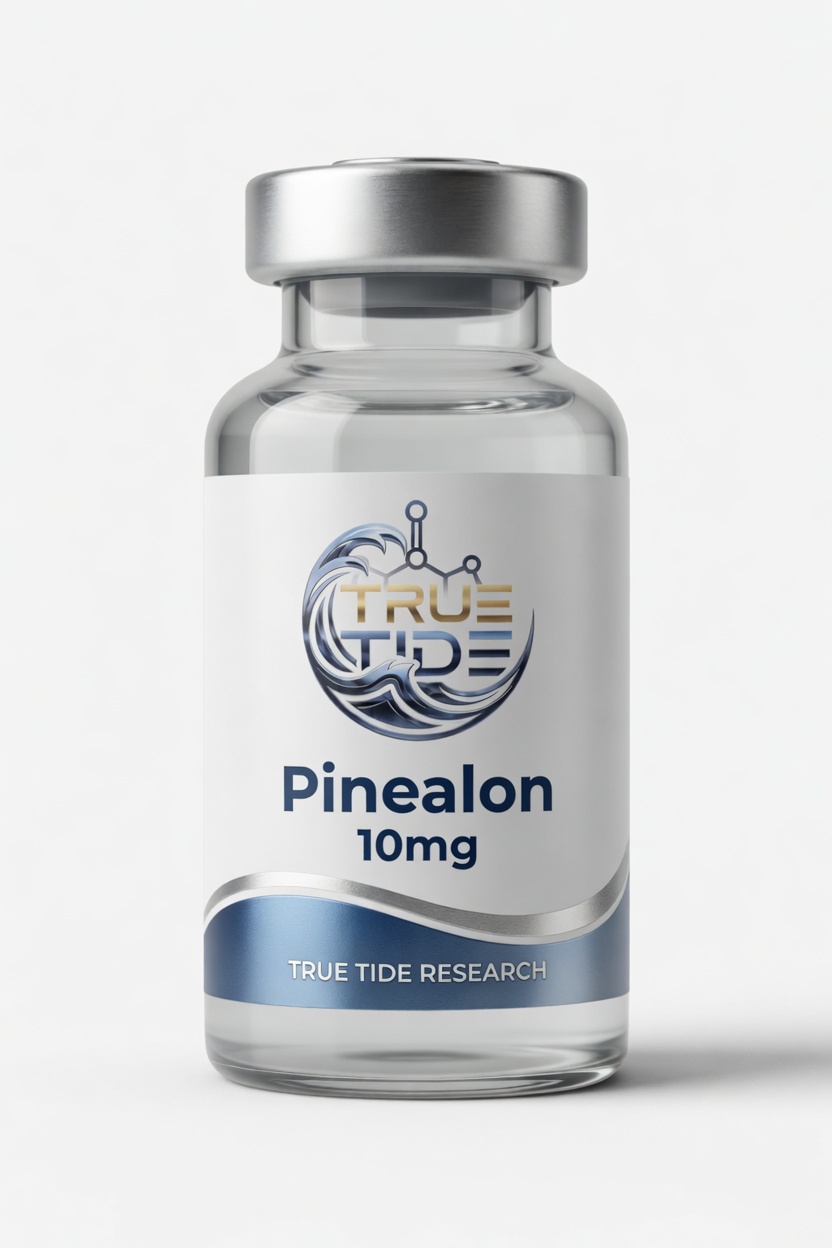
Pinealon (Glu-Asp-Arg, EDR) is a synthetic tripeptide developed by Prof. Vladimir Khavinson based on peptide fractions isolated from bovine pineal gland. Like Epithalon, it was developed as a bioregulatory peptide targeting gene expression in the nervous system. Research focuses on neuroprotection, circadian rhythm regulation, oxidative stress in the brain, and aging of the nervous system.
CAS 1703-71-5 | MW 417.4 Da | Glu-Asp-ArgStudies show pinealon reduces neuronal apoptosis in hypoxia and oxidative stress models — proposed via anti-apoptotic gene expression modulation.
Reduces lipid peroxidation and ROS in brain tissue, with superoxide dismutase (SOD) upregulation reported in aged rodent models.
Pineal gland origin suggests melatonin pathway interaction — research explores pinealon's effects on circadian gene expression and sleep architecture.
Like other Khavinson peptides, pinealon is proposed to interact with DNA promoter regions, modulating expression of neuroprotective genes.
Khavinson et al. demonstrated pinealon reduced neuronal death by 40% in perinatal hypoxia rat models and improved cognitive performance in offspring, compared to controls.
Neurosci Lett. 2002;320(1-2):87–90Studies in aged rodents show pinealon reduced brain lipid peroxidation markers and restored SOD activity toward younger baselines after 10-day administration.
Bull Exp Biol Med. 2007;143(1):43–46Pinealon administration during sleep deprivation studies showed partial preservation of circadian biomarkers (cortisol rhythmicity, melatonin patterns) vs controls.
Biomed Khimiya. 2011;57(4):397–406Published rodent studies use 10–100 µg/kg SC or intranasal. Research cycles typically 10 days with endpoint assessment at days 10 and 30. Brain tissue antioxidant assays (SOD, catalase, MDA) and neurological behavioral tests (Morris water maze, open field) are standard endpoints. Often paired with Epithalon in longevity panels.
| Full Name | Pinealon (EDR — Glu-Asp-Arg) |
| CAS Number | 1703-71-5 |
| Molecular Formula | C₁₄H₂₂N₄O₉ |
| Molecular Weight | 417.4 Da |
| Sequence | Glu-Asp-Arg |
| Origin | Synthetic pineal gland bioregulator |
| Purity | ≥99% by HPLC |
| Storage | −20°C, desiccated |