Telomere, Anti-Aging & Longevity Research
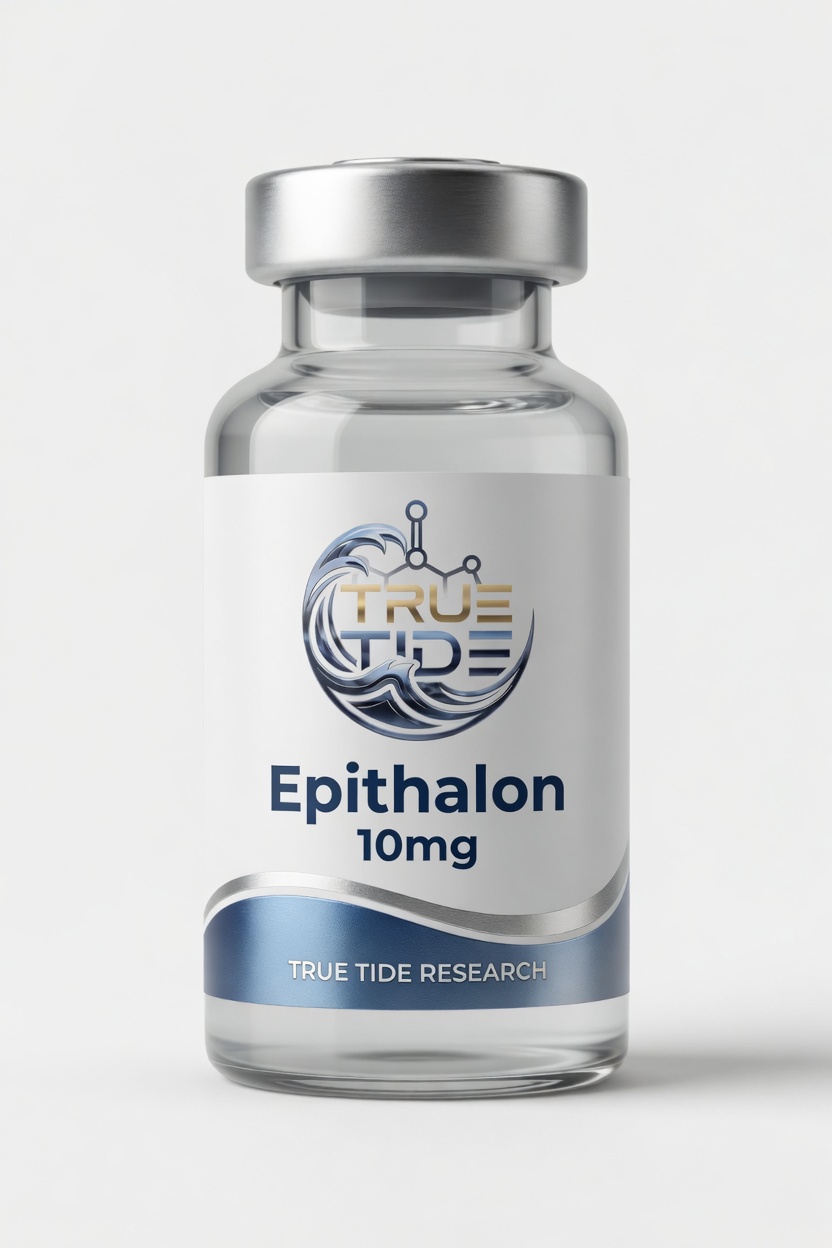
Epithalon (also spelled Epitalon) is a synthetic tetrapeptide (Ala-Glu-Asp-Gly) derived from Epithalamin, a polypeptide extract of the pineal gland. It was developed and extensively studied by Professor Vladimir Khavinson at the St. Petersburg Institute of Bioregulation and Gerontology over several decades. Research has demonstrated effects on telomere elongation, antioxidant enzyme activation, melatonin regulation, circadian rhythm normalisation, and neuroendocrine function.
Epithalon is a synthetic tetrapeptide consisting of four amino acids: Alanine-Glutamic acid-Aspartic acid-Glycine (Ala-Glu-Asp-Gly). It was originally identified as the biologically active component of Epithalamin, a pineal gland extract developed by Russian scientists as part of a comprehensive neuroendocrine regulation research programme. The peptide bioregulator theory underpinning this research proposes that short peptides serve as gene regulatory signals, and Epithalon was found to specifically interact with genes involved in cell cycle regulation and telomere maintenance.
Most notably, Epithalon has been shown to activate telomerase — the enzyme responsible for maintaining telomere length — in somatic cells that normally do not express it. This finding has made it one of the most studied peptides in the field of longevity and anti-aging biology.
One of the most remarkable findings in Epithalon research is its ability to activate telomerase (hTERT) in human somatic cells. Telomeres — the protective caps on chromosomes — shorten with each cell division, eventually triggering senescence or apoptosis. Telomerase can reverse this process by extending telomere length. Epithalon has been shown to upregulate hTERT expression in somatic cells that normally suppress this enzyme, offering a research model for studying cellular ageing and lifespan.
Research in aged animals demonstrates that Epithalon normalises altered circadian rhythms and restores melatonin secretion patterns that decline with age. The pineal gland-derived origin of Epithalon is relevant here — it appears to act on pineal function to restore the normal melatonin secretion cycle, with downstream effects on sleep, immune function, and antioxidant status.
Multiple studies show Epithalon increases the activity of superoxide dismutase (SOD), catalase, and glutathione peroxidase — key antioxidant enzymes that decline with age. This reduction in oxidative stress is proposed as a key mechanism behind the lifespan-extending effects observed in animal studies.
Khavinson VKh et al. demonstrated that Epithalon treatment of human fetal fibroblasts activated telomerase expression, increased telomere length, and extended cellular lifespan by 3–4 passages compared to controls. The finding established Epithalon as a peptide capable of directly engaging the cellular ageing programme.
Anisimov VN et al. reported that Epithalon treatment extended mean lifespan in Drosophila melanogaster by 11–16% and in CBA mice by 12% compared to controls, while reducing tumour incidence. The study also demonstrated normalisation of circadian rhythm parameters in treated animals.
Kossoy G et al. showed that Epithalon restored normal circadian melatonin secretion profiles in aged rats exhibiting age-related disruption of the light-dark cycle response. Pineal gland morphology was also improved in treated animals compared to untreated aged controls.
Research by Khavinson VKh demonstrated significant inhibition of tumour growth and metastasis in multiple animal cancer models following Epithalon treatment. The study proposed telomere stabilisation and antioxidant effects as the primary anti-tumour mechanisms.
Epithalon reconstitutes readily in sterile or bacteriostatic water. A standard 10mg vial reconstituted in 2ml BAC water gives a 5 mg/ml solution. Reconstituted peptide should be stored at 2–8°C and used within 30 days.
Rodent studies by Khavinson and colleagues typically employed doses of 0.5–1 mcg/kg administered intraperitoneally or subcutaneously over 2–3 week courses, with rest periods. Human-equivalent dose extrapolations suggest research interest in shorter, repeated protocols. These are compiled from published literature for scientific reference only.
| Product Name | Epithalon (Epitalon) |
| CAS Number | 307297-39-8 |
| Molecular Formula | C₁₄H₂₂N₄O₉ |
| Molecular Weight | 390.3 Da |
| Sequence | Ala-Glu-Asp-Gly |
| Appearance | White lyophilized powder |
| Purity | ≥99% (HPLC) |
| Storage (lyophilized) | −20°C, protected from light |
| Storage (reconstituted) | 2–8°C, use within 30 days |
| COA | Available with each order |