Cellular Energy, Sirtuin Activation & Anti-Aging Research
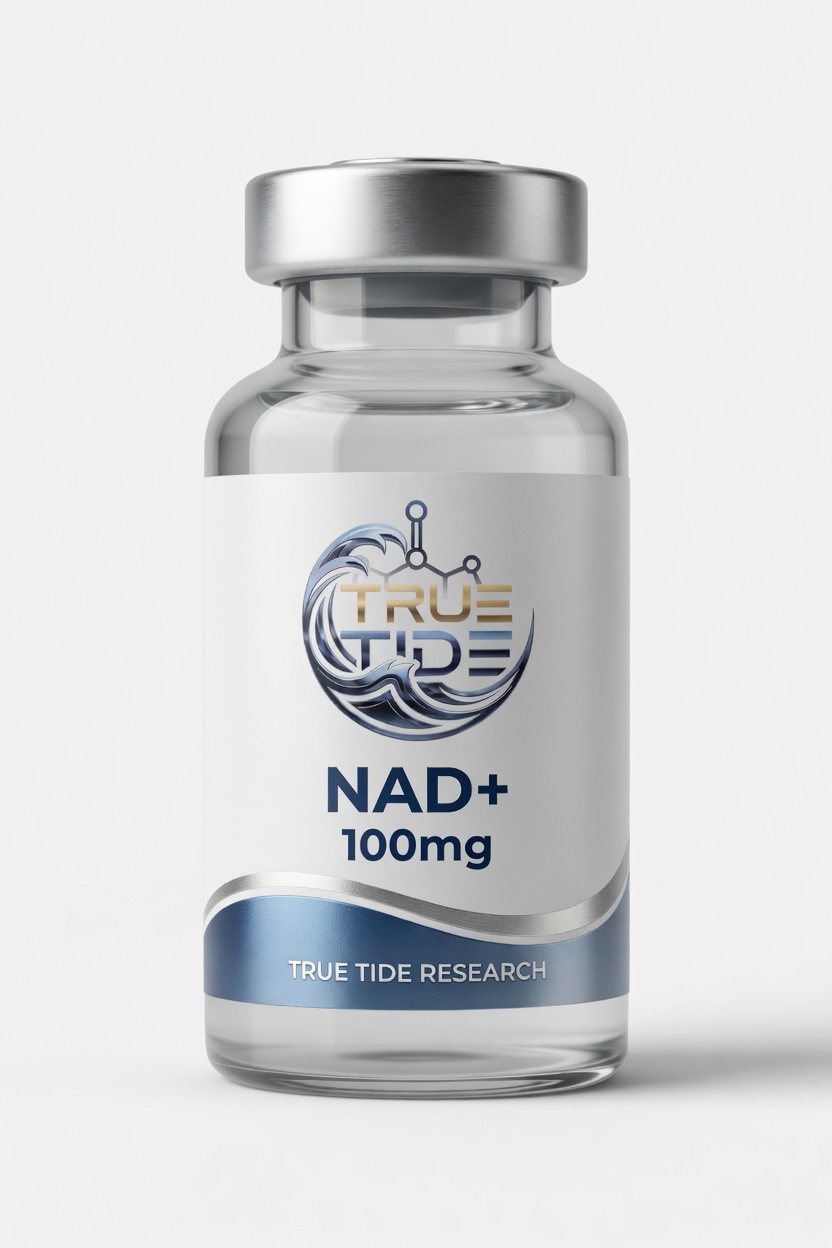
NAD+ (Nicotinamide Adenine Dinucleotide) is a fundamental coenzyme found in every living cell, serving as an essential electron carrier in cellular respiration and as a substrate for multiple enzyme families including sirtuins (SIRT1-7), PARP DNA repair enzymes, and CD38. NAD+ levels decline substantially with age and in metabolic disease states. Research across thousands of studies documents its roles in energy metabolism, mitochondrial biogenesis, DNA repair, circadian rhythm regulation, and longevity pathway activation.
Nicotinamide Adenine Dinucleotide (NAD+) is a dinucleotide coenzyme consisting of adenine and nicotinamide ribosides linked by two phosphate groups. It exists in oxidised (NAD+) and reduced (NADH) forms, cycling between them as it accepts and donates electrons in metabolic reactions. NAD+ is involved in over 500 enzymatic reactions and is considered one of the most important molecules in human biology.
Beyond its classical role as an electron carrier in the electron transport chain and glycolysis, NAD+ serves as a direct substrate for: sirtuins (deacetylases that regulate aging, metabolism, and stress responses), PARP enzymes (DNA repair), and CD38/cyclic ADP-ribose signalling. All of these pathways consume NAD+, making adequate cellular NAD+ levels critical to their function. NAD+ levels decline by approximately 50% between youth and middle age.
Sirtuins (SIRT1-7) are NAD+-dependent deacetylases and ADP-ribosyltransferases that regulate numerous biological processes including metabolism, stress responses, inflammation, and ageing. When NAD+ levels are elevated, sirtuin activity increases proportionally. SIRT1 activates AMPK and PGC-1α (promoting mitochondrial biogenesis), SIRT3 regulates mitochondrial function, and SIRT6 is involved in DNA repair and telomere maintenance.
PARP-1 (Poly ADP-ribose polymerase 1) is a DNA damage sensor that consumes NAD+ extensively during DNA repair processes. Elevated NAD+ supports robust PARP activity and efficient DNA repair — a mechanism relevant to both cancer biology and ageing research. Conversely, DNA damage causes massive PARP activation that depletes cellular NAD+, creating a metabolic crisis.
NAD+ activates the SIRT1-PGC-1α axis, which drives mitochondrial biogenesis — the production of new mitochondria. Research consistently shows that NAD+ supplementation increases mitochondrial density and function in aged tissues, effectively reversing an aspect of the metabolic deterioration associated with ageing.
Imai SI et al. demonstrated that NAD+ levels decline approximately 50% from young adulthood to middle age in multiple tissues, and that restoration of NAD+ in aged mice using NMN (an NAD+ precursor) reversed multiple age-associated metabolic deficits including insulin sensitivity, energy expenditure, and muscle function.
Mouchiroud L et al. showed that NAD+ supplementation extended lifespan in C. elegans by 10-15% through SIRT1-mediated mitochondrial unfolded protein response (UPRmt) activation. The study established a direct causal link between NAD+ levels, sirtuin activity, and organismal lifespan.
Stein LR and Imai S demonstrated that NAD+ supplementation using NMN protected against axonal degeneration in a peripheral neuropathy model, and that SIRT1 activation mediated the neuroprotective effects. Research in Alzheimer's models also shows improvements in cognitive function with NAD+ restoration.
Fang EF et al. showed that NAD+ supplementation significantly improved PARP-1 mediated DNA repair in aged mice, reducing DNA damage accumulation and extending healthy lifespan. The study demonstrated that the PARP/SIRT1 competition for NAD+ is a key determinant of ageing rate.
NAD+ lyophilized powder reconstitutes readily in sterile or bacteriostatic water. NAD+ is water-soluble and forms clear solutions. For larger amounts (500mg–1g vials), reconstitute in 5–10ml saline or sterile water to create working concentrations of 50–200 mg/ml.
Cell culture studies use NAD+ at concentrations of 0.1–10 mM to study intracellular signalling and enzyme activity. In vivo rodent studies using direct NAD+ administration have used 250–1000 mg/kg; however, NAD+ precursors (NMN, NR) are more commonly used for systemic in vivo research due to superior bioavailability. These are for scientific reference only.
| Product Name | NAD+ (Nicotinamide Adenine Dinucleotide, Oxidised) |
| CAS Number | 53-84-9 |
| Molecular Formula | C₂₁H₂₇N₇O₁₄P₂ |
| Molecular Weight | 663.4 Da |
| Appearance | White to off-white lyophilized powder |
| Purity | ≥99% (HPLC) |
| Storage (lyophilized) | −20°C, protected from light and humidity |
| Storage (reconstituted) | 2–8°C, use within 14 days |
| Solubility | Highly water-soluble |
| COA | Available with each order |