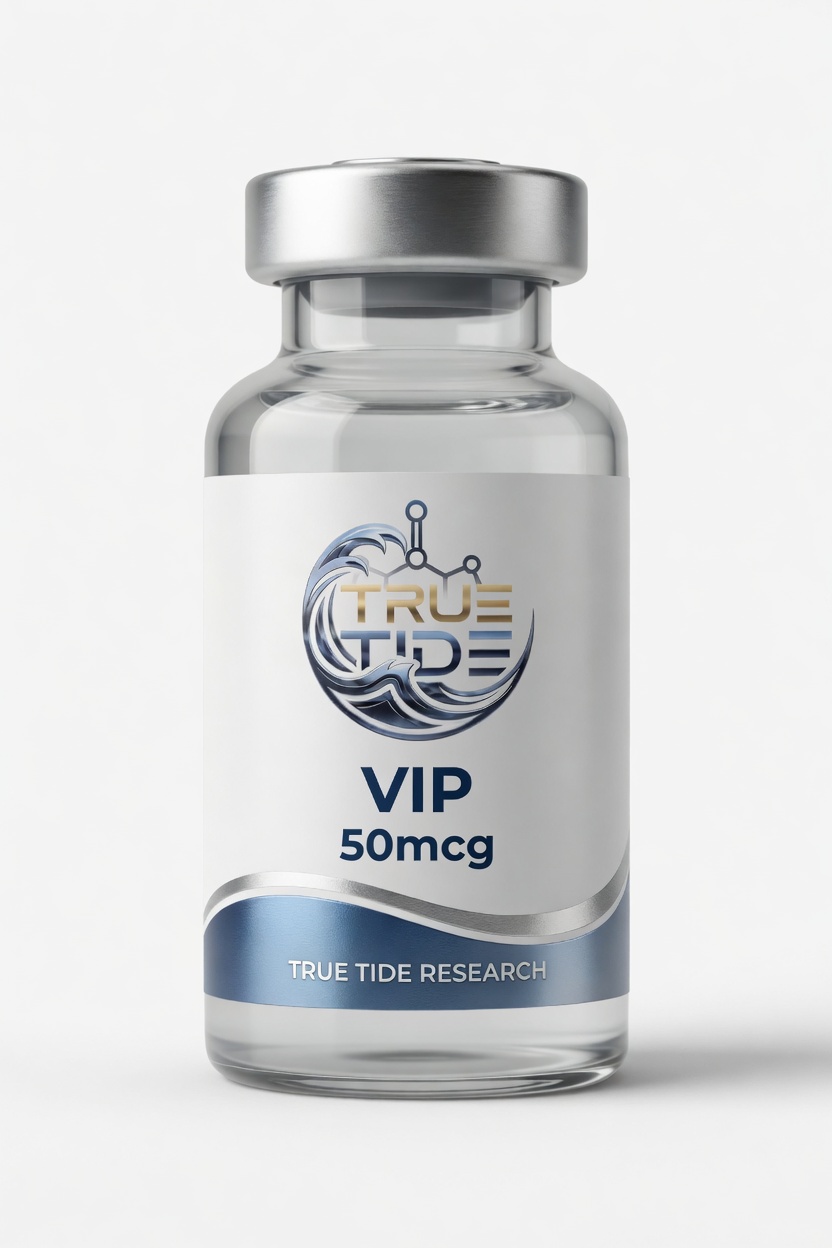
Vasoactive Intestinal Peptide (VIP) is a 28-amino acid neuropeptide distributed throughout the central and peripheral nervous systems, GI tract, lungs, and immune tissues. It acts via VPAC1 and VPAC2 receptors to produce vasodilation, smooth muscle relaxation, anti-inflammatory signalling, and neurotransmitter modulation. VIP is studied in models of pulmonary arterial hypertension, neuroinflammation, GI motility, and immune regulation.
CAS 37221-79-7 | MW 3325.9 Da | 28 amino acidsBinds VIP receptors VPAC1 (ubiquitous) and VPAC2 (brain, lung, GI) to activate adenylyl cyclase and cAMP/PKA signalling.
VIP is a potent pulmonary vasodilator. VIP levels are reduced in PAH patients — making it a key research compound for pulmonary hypertension models.
VPAC signalling in macrophages and T-cells shifts immune response toward Th2 and regulatory T-cell phenotypes, reducing pro-inflammatory cytokine production.
VIP promotes neuronal survival, neurite outgrowth, and BDNF secretion from astrocytes — studied in Alzheimer's and neurodegeneration models.
Said et al. conducted an inhaled VIP trial in PAH patients, showing significant improvement in 6-minute walk distance, pulmonary vascular resistance, and quality of life over 12 weeks.
Ann Intern Med. 2004;140(6):459–468Delgado et al. demonstrated VIP promoted hippocampal neurogenesis and protected against amyloid-β toxicity in mouse models, supporting its study in neurodegenerative research.
J Neurochem. 2008;107(3):756–769Abad et al. showed VIP significantly reduced colitis severity in DSS mouse models by shifting macrophage and T-cell populations toward anti-inflammatory phenotypes.
Gastroenterology. 2003;124(4):961–971PAH clinical trials used 200 µg inhaled 4x/day. Rodent research: 5–50 nmol/kg IV or SC. In vitro immune and neural studies: 0.1–100 nM VIP. Endpoints: pulmonary arterial pressure, cytokine panels (IL-10, TNF-α, IL-1β), neural viability assays, and GI motility measurements.
| Full Name | Vasoactive Intestinal Peptide (VIP) |
| CAS Number | 37221-79-7 |
| Molecular Formula | C₁₄₇H₂₃₆N₄₄O₄₂S |
| Molecular Weight | 3325.9 Da |
| Amino Acids | 28 |
| Receptors | VPAC1, VPAC2 |
| Purity | ≥99% by HPLC |
| Storage | −20°C, desiccated |