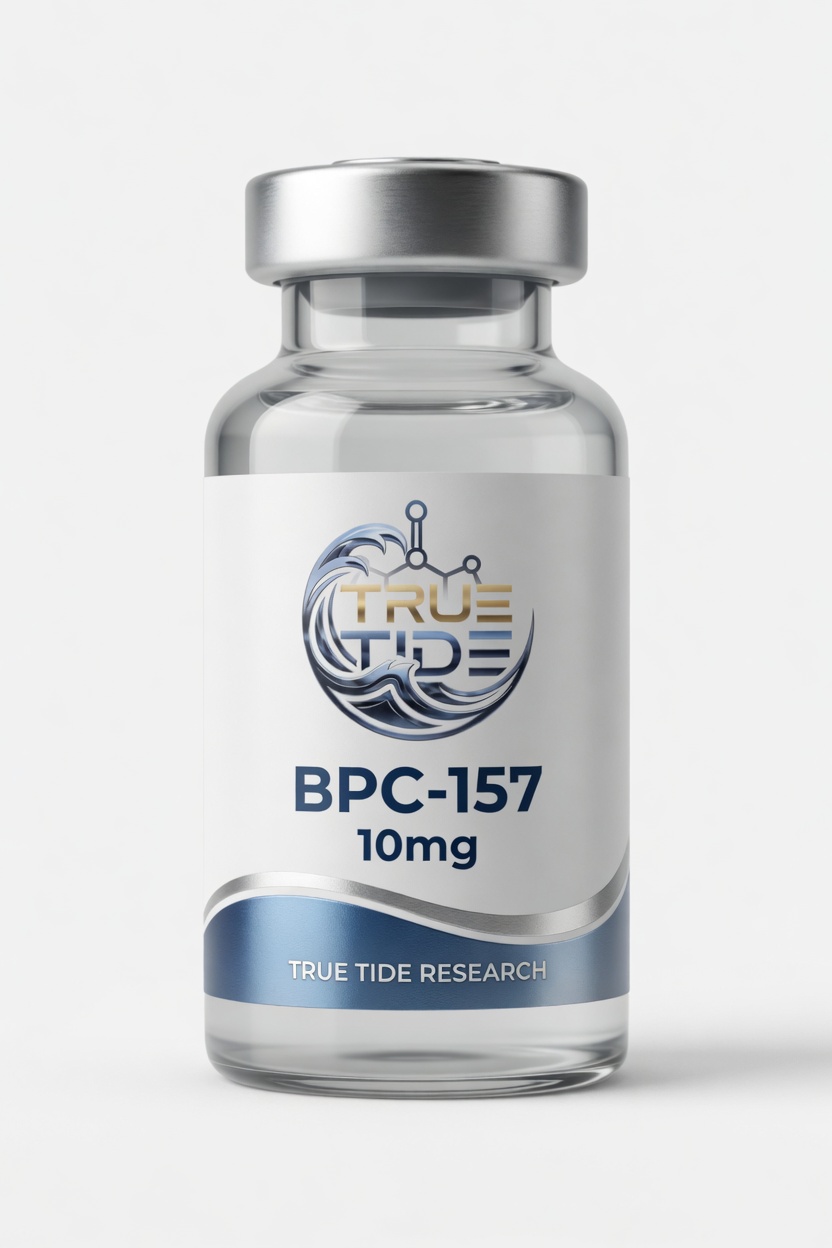
Peer-reviewed research summary compiled for qualified researchers. All references are from published scientific literature.
BPC-157 (Body Protection Compound-157) is a synthetic pentadecapeptide derived from a naturally occurring protein found in gastric juice. The sequence Gly-Glu-Pro-Pro-Pro-Gly-Lys-Pro-Ala-Asp-Asp-Ala-Gly-Leu-Val consists of 15 amino acids and was first isolated by researchers studying the cytoprotective properties of gastric mucosa.
Unlike many therapeutic peptides, BPC-157 is notable for its exceptional stability — it remains active in acidic environments (gastric juice, pH 1–2) where most peptides are rapidly degraded, which has made it particularly interesting for gastrointestinal research applications.
Pre-clinical research on BPC-157 spans multiple physiological systems. The peptide has been studied in the context of:
BPC-157 is distinctive among research peptides for several properties:
BPC-157 exerts its biological effects through several molecular pathways that have been identified in pre-clinical research. The peptide does not appear to act through a single receptor but rather through multiple converging mechanisms.
BPC-157 has been shown to upregulate endothelial NO synthase (eNOS), increasing NO bioavailability. This contributes to vasodilation, angiogenesis stimulation, and cytoprotection in vascular and GI tissue models.
Research demonstrates BPC-157 upregulates VEGF expression in injured tissues, accelerating neovascularisation. This is thought to be a primary mechanism behind observed tendon and wound healing acceleration.
BPC-157 activates focal adhesion kinase (FAK) and its downstream effector paxillin, promoting fibroblast migration to injury sites. This mechanical-signalling cascade is believed critical for tendon and connective tissue repair.
CNS research suggests BPC-157 modulates dopamine and serotonin receptor expression and sensitivity, offering a plausible mechanism for observed mood-stabilising and neuroprotective effects in stress and depression models.
BPC-157 has been shown to upregulate Early Growth Response Factor 1 (EGR-1), a zinc finger transcription factor involved in tendon-specific gene expression and collagen type I synthesis — central to tendon repair.
Some research indicates BPC-157 may enhance GHR (growth hormone receptor) sensitivity in target tissues without directly stimulating GH secretion, potentially amplifying local growth hormone signals at the tissue level.
BPC-157 is unusual among peptides for its stability in biological environments. Studies confirm activity in gastric acid (pH 1), plasma, and intestinal fluid. Plasma half-life has been estimated at approximately 4 hours in rodent models, though route of administration significantly affects pharmacokinetics. The peptide appears to act locally and systemically, with tissue distribution studies showing concentration in injured vs. healthy tissue.
One of the landmark studies demonstrating BPC-157's effects on Achilles tendon regeneration. Rats with transected Achilles tendons receiving BPC-157 (10μg/kg, subcutaneous) demonstrated significantly faster functional recovery and histologically superior tendon organisation compared to controls. Upregulation of collagen type I and type III, FAK, and EGR-1 were observed at the injury site.
Sikiric P et al. J Physiol Pharmacol. 2011;62(4):491-8. PMID: 22100905A comprehensive review of over 20 years of BPC-157 GI research confirmed the peptide's cytoprotective effect against multiple forms of GI injury, including NSAIDs, alcohol, stress, and corrosive substances. The review highlighted BPC-157's consistent ability to maintain gut barrier integrity and protect against ulceration across diverse experimental models. The peptide was equally effective administered locally (intragastric) and systemically (intraperitoneal).
Sikiric P et al. Curr Pharm Des. 2019;25(15):1762-1769. PMID: 31258064Rat gastrocnemius muscle crush injury model showed that BPC-157 (10μg/kg or 10ng/kg, intraperitoneally) significantly improved muscle force recovery compared to saline controls. Histological analysis showed reduced fibrosis and improved muscle fibre regeneration. Both doses were effective, with the nanogram dose (10ng/kg) showing biological activity comparable to the microgram dose — an unusual dose-response characteristic of this peptide.
Durdevic D et al. J Physiol Pharmacol. 2003;54(3):473-80. PMID: 14526085Research in a rat traumatic brain injury (TBI) model demonstrated that BPC-157 administration (10μg/kg, subcutaneous) significantly reduced cognitive deficits assessed by Morris Water Maze performance at 7 and 14 days post-injury. Brain lesion size was reduced, and markers of neuroinflammation (IL-6, TNF-α) were significantly lower in treated animals, suggesting both neuroprotective and anti-inflammatory mechanisms.
Tudor M et al. J Neurotrauma. 2010;27(6):1017-27. PMID: 20218875This study characterised BPC-157's interaction with the nitric oxide system, demonstrating that L-NAME (NO synthase inhibitor) could partly attenuate BPC-157 effects, while sodium nitroprusside (NO donor) synergised with it. BPC-157 significantly increased eNOS expression and promoted new blood vessel formation in wounded tissue, establishing the NO pathway as a key mediator of its healing effects.
Cesarec V et al. Eur J Pharmacol. 2013;700(1-3):203-11. PMID: 23458553Multiple independent studies have assessed the safety profile of BPC-157 in rodent models. No LD50 has been established — extremely high doses (even mg/kg range) have failed to produce mortality or significant adverse effects in published studies. No oncogenic, genotoxic, or reproductive toxicity has been reported in the peer-reviewed literature. The peptide does not appear to interfere with the hypothalamic-pituitary-adrenal (HPA) axis or sex hormone levels at studied doses.
Sikiric P et al. Curr Pharm Des. 2011;17(16):1641-58. PMID: 21548875The following information is provided for research reference purposes only. True Tide does not provide medical advice. BPC-157 is not approved for human use. This dosing information reflects data observed in pre-clinical research models and is not intended as a guide for human administration. All use must comply with applicable laws and institutional research protocols.
Published animal research has used a wide range of BPC-157 doses, with surprisingly consistent efficacy across dose ranges:
Pre-clinical research has demonstrated BPC-157 activity via multiple administration routes:
For laboratory research use, lyophilized BPC-157 is typically reconstituted with bacteriostatic water (BAC water) or sterile water. Standard research reconstitution:
True Tide supplies Bacteriostatic Water (BAC Water, 10ml) separately — available here →
| Product Name | BPC-157 (Body Protection Compound-157) |
| Sequence | Gly-Glu-Pro-Pro-Pro-Gly-Lys-Pro-Ala-Asp-Asp-Ala-Gly-Leu-Val |
| CAS Number | 137525-51-0 |
| Molecular Formula | C₆₂H₉₈N₁₆O₂₂ |
| Molecular Weight | 1419.55 g/mol |
| Appearance | White to off-white lyophilized powder |
| Purity (HPLC) | ≥99% (independently verified) |
| Solubility | Soluble in water at ≥1mg/ml |
| Storage (Lyophilized) | −20°C long term; 2–8°C short term (up to 3 months) |
| Storage (Reconstituted) | 2–8°C for up to 4 weeks; −20°C frozen aliquots |
| Source | Synthetic (solid-phase peptide synthesis) |
| Available Sizes | 5mg, 10mg, 20mg |
| Certificate of Analysis | Included with every order (HPLC + MS) |
| Intended Use | For research purposes only. Not for human or animal use. |