Healing, Angiogenesis & Tissue Repair Research
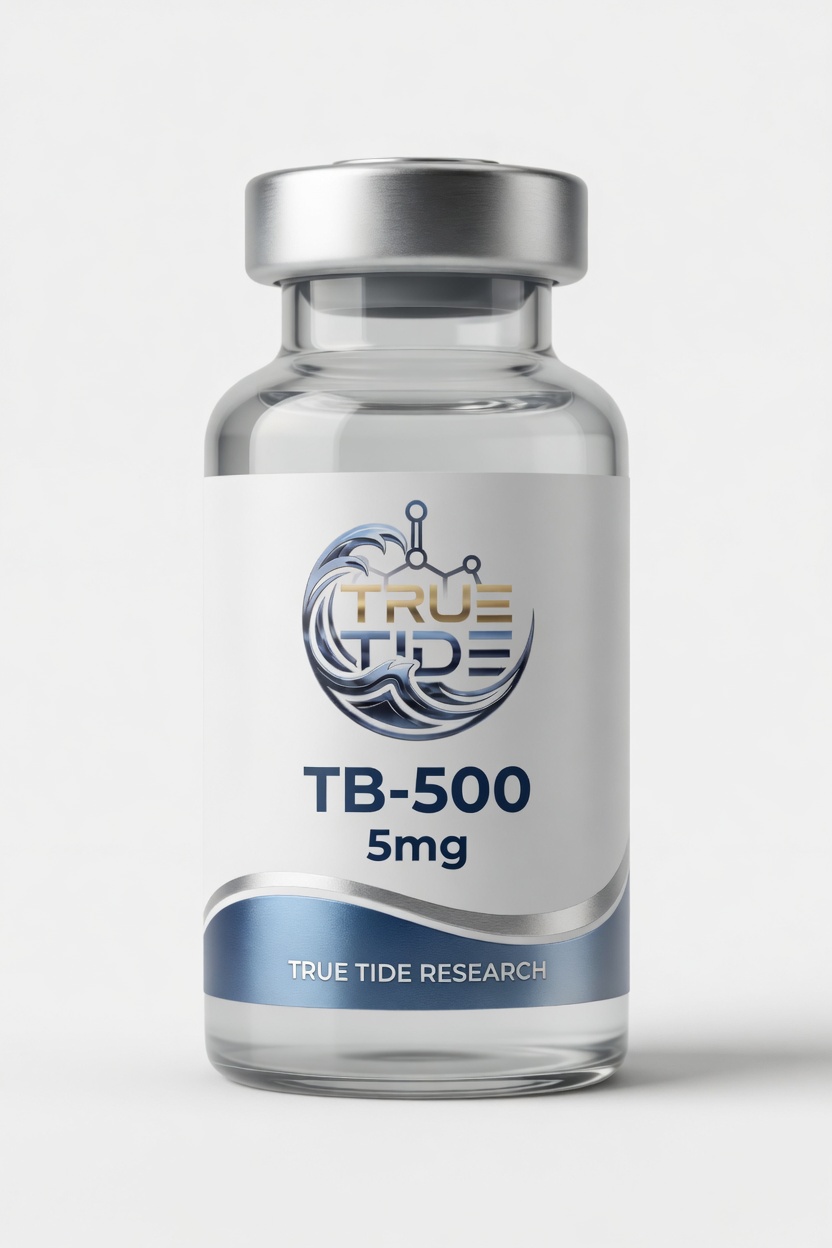
TB-500 is a synthetic peptide derived from the conserved actin-binding domain of Thymosin Beta-4. Studied for its roles in wound healing, angiogenesis, cell migration, anti-inflammatory signalling, and protection of cardiac and skeletal muscle tissue in pre-clinical models.
TB-500 (also known as Thymosin Beta-4 fragment or TB4) is a synthetic 17-amino acid peptide derived from the central actin-binding domain of Thymosin Beta-4 — a naturally occurring 43-amino acid protein found in high concentrations in platelets, wound fluid, and numerous cell types throughout the body. TB-500 isolates the functional LKKTETQ sequence responsible for most of Thymosin Beta-4's biological activity.
Research into TB-500 has demonstrated significant activity across multiple healing pathways, including promotion of angiogenesis (new blood vessel formation), modulation of actin dynamics in cell migration, reduction of inflammatory cytokines, and protection of cardiac tissue from ischaemic damage. It has been studied in models of tendon injury, muscle tear, skin wound healing, and neurological recovery.
TB-500 is frequently paired with BPC-157 in healing research protocols due to their complementary but distinct mechanisms — BPC-157 primarily upregulates growth factor receptors, while TB-500 acts on actin dynamics and angiogenesis. Together they represent a dual-pathway approach to tissue repair research that has gained significant attention in the pre-clinical literature.
The core mechanism of TB-500 centres on its interaction with G-actin (globular actin). The LKKTETQ domain of the peptide sequesters monomeric G-actin, preventing its polymerisation into F-actin filaments. This regulation of actin dynamics is critical to cell migration, differentiation, and proliferation — all essential processes in tissue repair and wound healing.
TB-500 upregulates the expression of several pro-angiogenic factors, most notably vascular endothelial growth factor (VEGF) and its receptors. Studies demonstrate that TB-500 promotes endothelial cell migration and tube formation in vitro, and significantly accelerates blood vessel formation in ischaemic tissue in vivo. This neovascularisation activity is particularly relevant to cardiac and muscle recovery research.
TB-500 has been shown to downregulate pro-inflammatory cytokines including TNF-α and IL-6 while promoting anti-inflammatory mediators. It modulates NF-κB signalling, a key inflammatory pathway. This dual role — promoting healing while suppressing damaging inflammation — distinguishes TB-500 from simple growth factor approaches.
Research in cardiac ischaemia models has demonstrated that TB-500 can stimulate cardiomyocyte migration and survival, potentially through PI3K/Akt pathway activation. In skeletal muscle, TB-500 appears to promote satellite cell activation and differentiation, key mechanisms in muscle regeneration following injury.
Goldstein AL et al. demonstrated that Thymosin Beta-4 significantly accelerated full-thickness wound healing in a rat model, with treated animals showing faster re-epithelialisation, collagen deposition, and vascularisation compared to controls. The LKKTETQ domain was identified as the minimal effective sequence.
Bock-Marquette I et al. showed that TB4 treatment following experimental myocardial infarction in mice led to improved cardiac function, reduced infarct size, and activation of cardiomyocyte survival pathways including PI3K and Akt. Treated animals showed significantly better contractile function at 4 weeks post-infarction.
Research by Barres C et al. examined the effects of TB-500 on experimental Achilles tendon rupture. Animals receiving TB4 treatment showed accelerated histological healing, improved collagen fibre organisation, and greater tensile strength at the repair site compared to controls at 6 and 12 weeks.
Sosne G et al. demonstrated that Thymosin Beta-4 suppressed corneal inflammation through downregulation of NF-κB and reduction of TNF-α, IL-1β, and IL-6. The peptide showed potent anti-inflammatory activity comparable to corticosteroids without associated adverse effects in the study model.
Grant DS et al. showed that Thymosin Beta-4 significantly promoted endothelial cell migration and tube formation in vitro, and induced neovascularisation in a corneal micropocket assay. VEGF upregulation and integrin-linked kinase (ILK) activation were identified as key mechanisms.
TB-500 lyophilized powder is typically reconstituted with bacteriostatic water (BAC water). Standard reconstitution involves adding 1–2ml of BAC water to a 5mg vial, allowing the peptide to dissolve gently without vigorous shaking. Reconstituted solutions should be stored at 2–8°C and used within 28 days.
Pre-clinical rodent studies have typically employed weight-based dosing in the range of 200–500 mcg/kg administered subcutaneously or intraperitoneally. In vitro studies have used concentrations of 1–100 ng/ml for cell culture work. These figures are for scientific reference only and do not constitute dosing recommendations.
| Product Name | TB-500 (Thymosin Beta-4 Fragment) |
| CAS Number | 77591-33-4 |
| Molecular Formula | C₁₂₁H₂₀₀N₄₄O₃₉ |
| Molecular Weight | 4,963.4 Da |
| Sequence | Ac-LKKTETQ |
| Appearance | White lyophilized powder |
| Purity | ≥99% (HPLC) |
| Storage (lyophilized) | −20°C, protected from light |
| Storage (reconstituted) | 2–8°C, use within 28 days |
| Solubility | Water, aqueous buffers, bacteriostatic water |
| Form | Lyophilized powder in sealed glass vials |
| COA | Available with each order (HPLC + MS) |